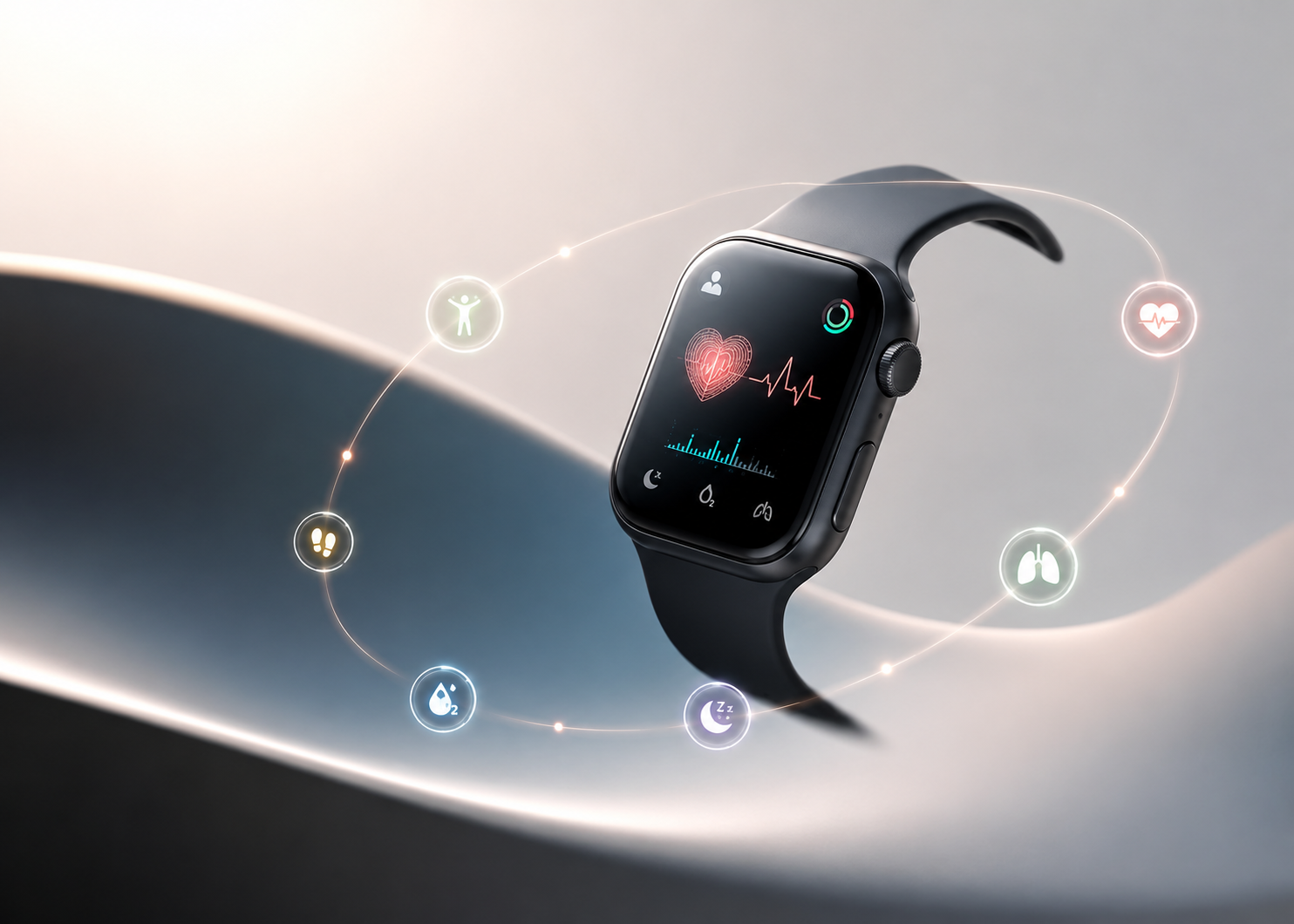
 Wearable Labs: Health Tracking Beyond the Smartwatch
Beyond Smartwatches: How Wearable Labs Is Transforming Health Tracking
Once upon a time, health tracking meant counting steps. Then came the smartwatch — a sleek rectangle on the wrist that turned movement into metrics, pulse into progress, and data into lifestyle choices. But as we step into the latter half of the 2020s, a new wave of health technology is unfolding — one that’s pushing the boundaries of what wearable devices can sense, analyze & even predict.
Welcome to the world of Wearable Labs, a movement that takes health tracking beyond the wrist and into the living fabric of our bodies and environments. Here, devices don’t just measure your heart rate — they interpret your biology. They don’t just monitor your sleep — they analyze your cellular recovery, hydration levels & emotional state. They don’t just track — they transform the very definition of wellness.
The smartwatch was only the beginning. The next generation of wearables will live on your skin, in your clothes, in your bloodstream — quietly, constantly & intelligently keeping you in tune with yourself.
For years, wearables existed as individual gadgets: smartwatches, rings, fitness trackers. Each had its app, each promised insight & each lived in its silo. The future is very different. Wearable Labs are about integration — merging sensors, AI & bio-data into a single connected ecosystem.
Imagine waking up in 2026. Your smart pillow has already analyzed your REM cycles, noting your respiratory rhythm overnight. Your smart shirt measures your hydration levels through sweat biomarkers. Your AR glasses notice subtle shifts in your posture and facial tension, signaling early fatigue. The moment you stand, a digital twin of your body — your personal health avatar — updates automatically, powered by nanotech sensors and edge AI.
That’s not science fiction. It’s the future being shaped by companies like Whoop, Oura, Garmin, Ultrahuman & Apple, alongside emerging biotech startups integrating nanotechnology, biofeedback & personalized AI diagnostics.
The world’s largest laboratory is becoming your own body — seamlessly connected, constantly optimized & always learning.
One of the biggest limitations of smartwatches is placement — the wrist can only tell so much. Heart rate, steps & sleep patterns are useful, but they barely scratch the surface of human biology.
The next revolution is skin-tech — ultra-thin, flexible electronic patches that stick to your body like a Band-Aid but function like a miniature lab. These “digital tattoos” can read glucose levels, lactate buildup, blood oxygen & even hormone fluctuations in real-time.
Researchers at Northwestern University and MIT Media Lab have already created skin-mounted sensors that stretch, breathe & monitor sweat composition. These patches can warn athletes before dehydration hits or alert diabetics before glucose spikes. Some prototypes even release microdoses of medication when anomalies are detected — essentially becoming wearable pharmacists.
Soon, these patches will sync with your neural signals, helping detect stress or anxiety even before you’re conscious of it. They’ll serve as early warning systems for heart attacks, infections or even burnout — long before a doctor visit.
The line between healthcare and technology isn’t blurring — it’s merging.
What if your T-shirt could detect muscle strain or early signs of heatstroke? What if your running shoes could analyze your gait and adjust cushioning dynamically to prevent injury?
Smart fabrics are transforming fashion into a platform for wellness. Using conductive fibers, micro-sensors, and AI processing modules, companies like Hexoskin, Myant & Under Armour’s FutureLab are turning clothing into diagnostic tools.
A smart compression shirt might track breathing patterns and oxygen efficiency. A pair of leggings might monitor lactic acid buildup during workouts. A sports bra might measure heart rate variability more accurately than any smartwatch ever could.
In hospitals, smart gowns embedded with nanosensors could replace dozens of bulky monitors, allowing patients to move freely while data streams directly to their doctor’s tablet.
These innovations aren’t just about convenience — they redefine preventive healthcare. In the future, your wardrobe could be your first line of defense against illness.
As health technology gets smaller, smarter & safer, wearables are beginning to enter the body. Welcome to bio-wearables — devices that monitor from within.
Tiny biosensors, often no bigger than a grain of rice, are being developed to live under the skin or in the bloodstream. They can measure everything from oxygen levels to metabolic activity, transmitting data wirelessly to your phone or doctor.
Dexcom’s G7 continuous glucose monitor, Senseonics’ Eversense implantable sensor & Proteus Digital Health’s ingestible pill sensors are early examples. These devices act as internal laboratories, constantly analyzing your biochemistry and predicting potential health issues before symptoms appear.
By 2030, experts predict that nanobots — microscopic devices capable of swimming through your bloodstream — will be diagnosing and repairing tissues in real-time. That might sound futuristic, but early prototypes already exist for cancer detection and drug delivery.
In essence, Wearable Labs will evolve from something you wear to something you are.
Data without understanding is noise. That’s where AI-driven analytics turn wearables into intelligent health companions.
Imagine your wearable system not just collecting information but correlating it — connecting sleep disruption with hydration loss, identifying the emotional triggers behind stress spikes & even forecasting health risks days or weeks in advance.
Modern health AIs, trained on massive datasets, are beginning to detect early signs of diseases such as diabetes, heart failure & depression through subtle biometric patterns. Algorithms like DeepHeart and CardioAI have already demonstrated the ability to identify heart disease risk using only wearable sensor data.
Soon, your personal AI health assistant might sound like this:
“Your glucose variability has been trending upward for three days. Based on hydration, diet & rest patterns, there’s a 60% chance your body is entering pre-inflammatory mode. Would you like me to adjust your meal plan?”
It’s like having a team of doctors & data scientists inside your phone — monitoring not just your body but your life rhythms.
With great data comes great responsibility. As wearables evolve into bio-integrated systems, the question of who owns your health data becomes crucial.
In 2026 and beyond, wearables will know more about you than your doctor — maybe even more than you do. Heart rate, hormone levels, sleep cycles, stress responses, emotional shifts — this data paints an intimate portrait of your inner world.
Who gets access? Tech companies? Insurance providers? Governments?
The rise of Wearable Labs brings immense ethical and privacy challenges. Imagine an employer analyzing your biometric stress to gauge productivity or insurers adjusting premiums based on your health data. Without strong digital rights protections, the future could slip from wellness to surveillance.
That’s why global initiatives — from the World Health Organization’s Digital Health Framework to the EU’s GDPR Health Data Extension — are emphasizing transparency, user consent & encryption-first design.
The next health revolution must be not only intelligent — but ethical.
The wearable revolution is being shaped by both Silicon Valley and the healthcare sector.
Apple is quietly turning the Apple Watch into a regulated medical device, with FDA-approved ECG and blood oxygen monitoring.
Google’s Fitbit is investing heavily in predictive AI to detect conditions before symptoms appear.
Amazon Halo focuses on tone analysis, body fat imaging & emotional well-being.
Meta is developing biometric gloves for virtual health monitoring in the metaverse.
Samsung is exploring skin-based glucose detection.
Meanwhile, startups like Ultrahuman, Levels & BioIntelliSense are racing ahead with metabolic and continuous diagnostics that could soon make annual checkups obsolete.
The competition isn’t about who makes the best gadget anymore — it’s about who builds the most intelligent health ecosystem.
While technology advances rapidly, the ultimate purpose of these devices isn’t data — it’s human empowerment.
Wearable Labs aim to reconnect us with our bodies in a world where we often ignore their signals. They’re about self-awareness, not surveillance; prevention, not panic; connection, not control.
Imagine being able to detect burnout before it hits or knowing exactly when your immune system needs rest. Imagine never again wondering, “Am I okay?” — because your body and your tech are in constant conversation.
That’s the real promise of Wearable Labs: not to make humans more robotic, but to make robots more human — empathetic, intuitive & health-centered.
As we move toward 2030, the landscape of personal health will look radically different. Smartwatches will seem primitive — relics of an era when we thought “10,000 steps” defined fitness.
By then:
Your clothes will diagnose illness before symptoms appear.
Your AI will recommend rest days based on cellular recovery.
Your skin patch will deliver vitamins when deficiencies arise.
Your bio-digital twin will model your body to predict long-term outcomes.
Your health data wallet will give you full control over your own biometrics.
Healthcare will shift from reactive to predictive. Hospitals will become health hubs, not emergency centers. And individuals — equipped with Wearable Labs — will become the scientists of their own biology.
But this new world won’t come easy.
Interoperability: Devices from different brands must communicate seamlessly.
Data accuracy: Biometric readings must reach medical-grade precision.
Cost barriers: Advanced health tech should be accessible, not elitist.
Human trust: People must believe in and understand the data they receive.
Regulation: Governments need agile frameworks that keep pace with innovation.
Without addressing these, the future of Wearable Labs risks remaining exclusive — an innovation for the few instead of a revolution for all.
In the age of Wearable Labs, your body becomes both the experiment and the discovery. Technology no longer sits on a desk or a wrist — it breathes with you, learns with you & evolves alongside you.
We’re not far from a world where every heartbeat, every breath, every neural spark becomes part of a greater feedback loop — a continuous conversation between humans and machines that redefines what it means to live a healthy life.
The smartwatch gave us data.
Wearable Labs will give us understanding.
And in that understanding lies the future of humanity’s relationship with health, technology & the self.
The future of health isn’t in hospitals — it’s in you.
It’s embedded in your clothes, flowing through your veins & shimmering in invisible data streams that connect your biology to the cloud.
As we step into 2026 and beyond, the next frontier of medicine won’t be built in labs — it will be worn.
Welcome to Wearable Labs, where life itself becomes the most powerful experiment ever conducted.





💬 Comment Section