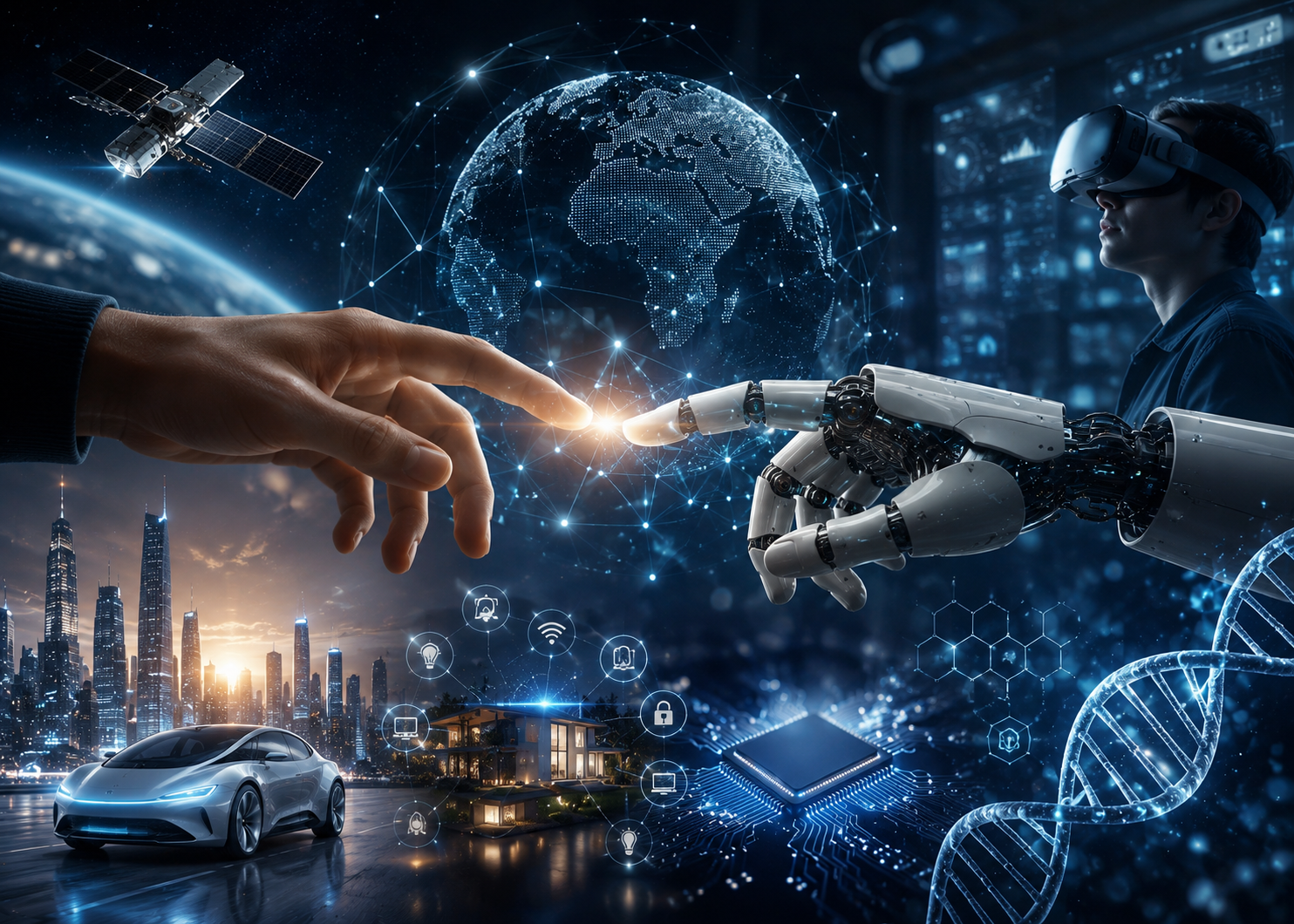
 The Near Horizon: Unveiling the Tech Wonders Poised to Redefine 2026
Imagine waking in 2026, not to a jarring alarm, but to a smart mirror gently illuminating, offering real-time insights into your sleep quality and subtly suggesting a nutrient-rich breakfast. As you leave, a gentle hum overhead signals a personal delivery drone departing, having dropped off your morning essentials. Later, walking through the city, sleek augmented reality (AR) glasses seamlessly overlay digital navigation arrows on the street, pointing out a new café with glowing real-time reviews hovering above its door. This isn't a scene plucked from a distant cyberpunk narrative; it's the rapidly approaching reality of 2026, a pivotal year where several nascent technologies mature into tangible, impactful items that fundamentally alter our interactions with the world, our health & each other.
The technological landscape is a ceaselessly shifting tapestry, but 2026 stands out as a nexus of profound transformation. We're moving beyond mere incremental updates to existing gadgets. The "upcoming tech items" we speak of are not just theoretical concepts confined to research labs; they are consumer-ready or near-ready products and services that will profoundly reshape our daily experiences. These are the innovations we'll actually touch, wear, command & integrate into the very fabric of our existence. From the intimate whisperings of personalized AI to the vivid illusions of immersive realities and the silent revolution of sustainable innovation, 2026 promises a future where technology isn't just a tool, but an intuitive, almost organic extension of ourselves. This post will journey through these groundbreaking advancements, exploring how personalized AI will become our digital doppelgängers, how immersive realities will blur the lines between the digital and physical & how a new generation of sustainable tech will empower us with a conscience.
By 2026, the artificial intelligence we interact with will transcend the rudimentary command-and-response systems we know today. AI will shed its skin of a helpful but generic assistant, evolving into a truly intimate, personalized digital companion that anticipates, predicts & profoundly understands our unique human context.
A. The Rise of Proactive AI Assistants (Beyond Siri & Alexa)
Remember barking orders at Siri or Alexa, often to receive a literal interpretation of your command? By 2026, that era will feel archaic. The next generation of AI assistants, powered by increasingly sophisticated large language models (LLMs) and advanced machine learning, will transform from reactive interfaces into proactive, predictive & hyper-personalized entities. They won't just answer questions; they'll anticipate your needs, often before you even consciously formulate them.
Consider the evolution: Today, your AI might suggest a restaurant based on your search history. In 2026, your AI, let’s call it "Aura," might suggest a specific Italian trattoria known for its quiet ambiance because it knows you had a stressful day at work (gleaned from your calendar and biometric data from your wearable) & simultaneously booked a table, ordered a ride & coordinated with your partner – all with minimal prompting. This leap is driven by:
Contextual Awareness that Borders on Empathy: These AIs will possess a deep, multi-layered understanding of your habits, preferences, schedule & even your emotional state. Through constant, passive learning from your digital interactions, calendar, location data & crucially, bio-sensors from your wearables, they'll build an incredibly rich profile. Aura will know your morning routine, your coffee order, your preferred news sources & even the subtle signs of impending fatigue or stress.
Seamless, Ubiquitous Integration: The notion of interacting with AI solely through your phone or smart speaker will dissolve. By 2026, your AI will operate as one continuous, intelligent entity across all your devices: your smartphone, smart home, car, work computer & a new generation of discreet wearables. It’s not just synced; it is the intelligence weaving through your digital life, ensuring continuity whether you're at your desk, in transit or unwinding at home.
The Personalized "Digital Twin": Your Digital Doppelgänger: This is perhaps the most captivating aspect. Your AI will become so adept at understanding your preferences and decision-making patterns that it will function as a "digital twin" – an AI entity capable of making small, routine decisions on your behalf. Imagine your digital doppelgänger proactively ordering your regular coffee for pickup on your usual route, suggesting an optimal traffic-avoiding route that also incorporates a scenic detour it knows you appreciate or even filtering your emails with such precision that you only see what truly matters. This isn't just automation; it's "whispering insights" and acting as a "bespoke butler in your pocket," freeing up precious cognitive space.
The impact of these proactive AI assistants will be profound. We anticipate enhanced productivity, as trivial decisions and mundane tasks are seamlessly managed. There will be a significant reduction in cognitive load, allowing us to focus on higher-level thinking and creative endeavors. Furthermore, the hyper-personalization will lead to uncannily accurate recommendations across health, entertainment & finance, ensuring experiences and services are always tailored to our evolving needs. As Gartner and other analysts suggest, by 2026, AI augmentation will be less about replacing humans and more about creating a powerful, symbiotic partnership, making daily life incredibly smoother and more intuitive.
B. AI-Enhanced Wearables: The Intelligent Second Skin
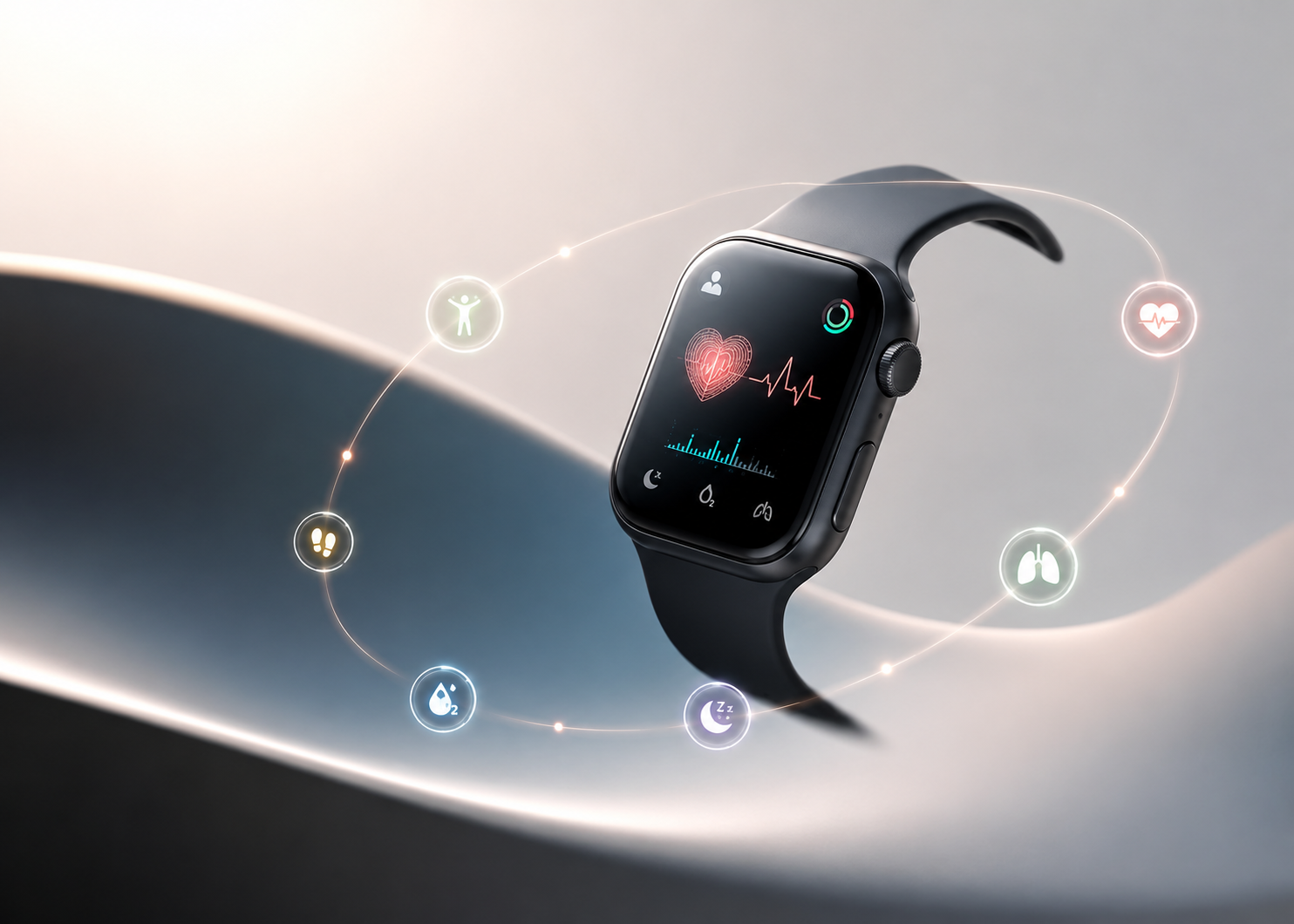
Forget the clunky smartwatches of the early 2020s. By 2026, AI-enhanced wearables will have evolved into an intelligent second skin – discreet, powerful devices designed for seamless integration with our bodies and minds. We're talking about advanced smart rings (like those from Oura or Movano Health, significantly matured), almost invisible smart patches or even fabric-integrated sensors woven directly into clothing.
The focus shifts from simply tracking metrics to providing hyper-personalized, actionable health insights and subtle cognitive augmentation:
Hyper-Personalized Health Monitoring: A Silent Guardian; These wearables will offer real-time stress analysis, moving beyond mere heart rate variability to interpret physiological cues for impending burnout. They'll provide predictive illness warnings, detecting subtle changes in biomarkers that suggest the onset of a cold or flu days before symptoms appear. Crucially, continuous glucose monitoring (CGM), once confined to diabetics, will become non-invasive and mainstream, offering personalized dietary insights to everyone, optimizing energy levels & preventing mid-afternoon slumps. Sleep optimization will reach new levels, with wearables guiding users through ideal sleep environments and routines based on their unique circadian rhythms. This is "anticipating ailments" before they manifest, making health management proactive & preventive.
Cognitive Augmentation: Subtle Boosts for the Mind: Beyond physical health, 2026's wearables will offer subtle cognitive boosts. Imagine discreet cues for focus, haptic nudges to remind you to take a break or memory assistance that surfaces relevant information during a conversation (e.g., a meeting participant's name or a key project detail) directly into your earbud or AR glasses. Real-time language translation will become truly seamless, breaking down communication barriers with unprecedented fluidity.
Invisible Interfaces: Redefining the Human-Tech Interface; The future of interaction isn't always about screens. 2026 will see advancements in invisible interfaces, where gesture control (e.g., subtle hand movements detected by a smart ring), thought-based commands (basic commands interpreted from brain activity via non-invasive sensors) & nuanced haptic feedback replace the need for constant visual engagement. Your device might vibrate in a specific pattern to alert you to an urgent email or a gentle pressure on your wrist could guide you through city streets. This is "redefining the human-tech interface," making our interaction with technology almost instinctual.
The impact of these AI-enhanced wearables is transformative: proactive health management that empowers individuals, subtle cognitive boosts for enhanced performance & seamless, intuitive device control that reduces digital friction. They act as "a silent guardian," always attuned to our well-being, blurring the lines between our biological selves and our digital extensions.
The dream of merging digital information with our physical world has long fascinated us. By 2026, this "Immersive Frontier" will not just be a niche for gamers or tech enthusiasts; it will be an emerging reality for the everyday consumer, thanks to advancements in spatial computing and multi-sensory extended reality (XR) experiences.
A. Mainstream Spatial Computing: AR Glasses as the New Smartphone
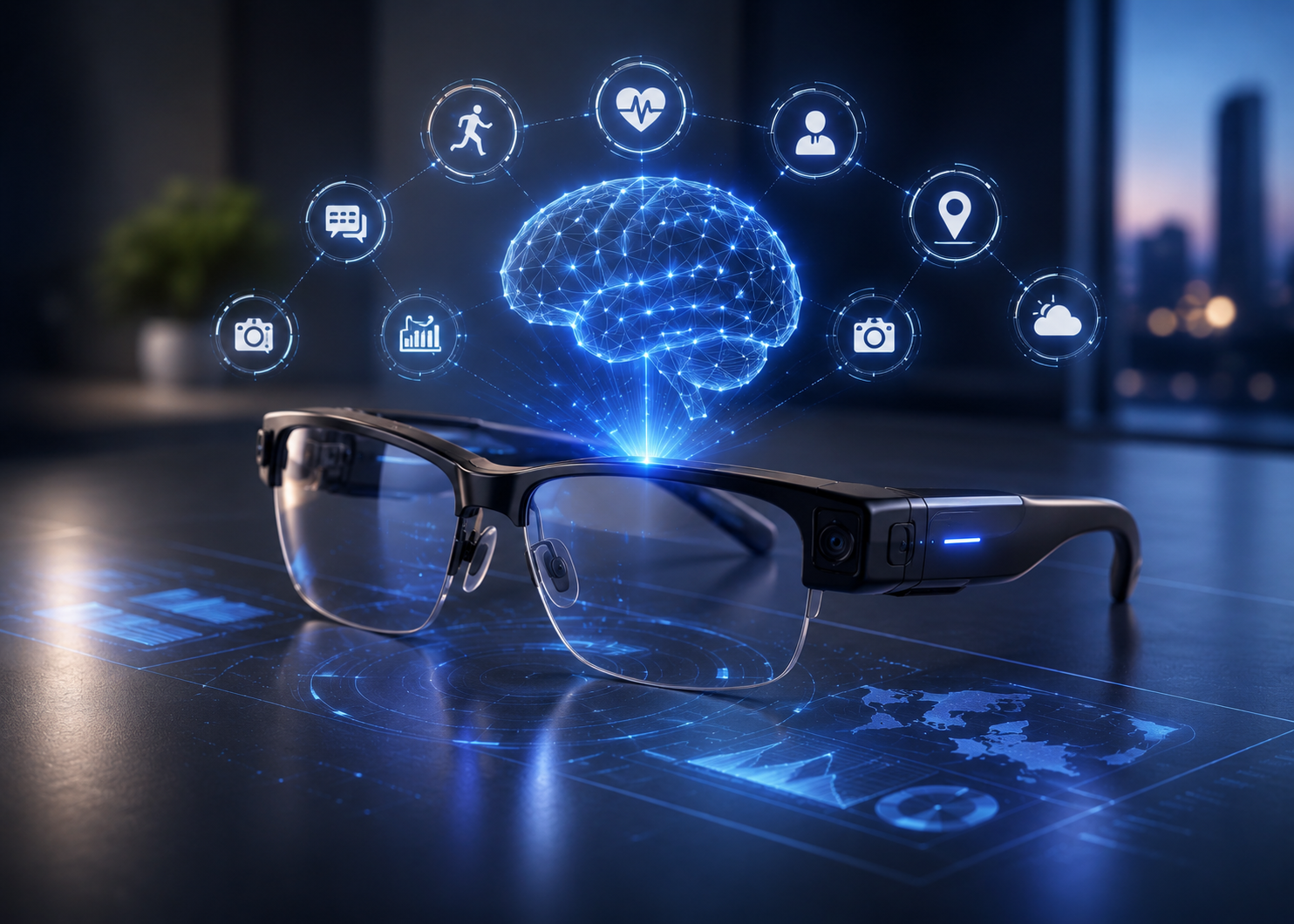
The bulky, often socially awkward VR headsets of yesteryear are giving way to a new paradigm. By 2026, sleek, lightweight Augmented Reality (AR) glasses are on the cusp of becoming a common personal device, poised to fundamentally alter how we interact with information and our environment, much like smartphones did two decades prior. Companies like Apple, Google & Meta are investing heavily in this space, with analyst firms like IDC predicting significant market growth.
These aren't just display devices; they are spatial computers, capable of understanding and mapping your physical environment to seamlessly integrate digital content. Key experiences will include:
Contextual Information Overlays: The World as Your Interactive Canvas; Imagine walking down a street, and your AR glasses project digital navigation arrows directly onto the pavement, guiding you turn-by-turn without glancing at a phone. Look at a restaurant and its menu, real-time product reviews & wait times float elegantly above its entrance. Spot a landmark & historical facts or interactive guides appear in your peripheral vision. Even socially, a friend’s social profiles or a reminder of their last conversation might subtly appear when you look at them, enriching interactions. This transforms "the world as your interactive canvas," where "digital whispers into your peripheral vision" enhance every moment.
"Digital Twins" of Physical Spaces: Bringing Plans to Life; For professionals, AR glasses will be invaluable. Architects and designers will interact with hyper-realistic 3D virtual models of buildings superimposed onto construction sites. Homeowners can visualize new furniture or renovation plans within their actual living spaces before making a purchase. Maintenance technicians will see step-by-step repair instructions overlaid directly onto complex machinery. This real-time, spatial interaction revolutionizes planning, design & execution.
Interactive Entertainment: Gaming that Bleeds into Reality; Gaming will move beyond the screen. Imagine AR games where virtual characters battle across your living room floor or interactive narratives unfold as you walk through a park, with digital elements responding to your physical movements. Educational experiences will become deeply engaging, allowing students to explore 3D models of historical artifacts or anatomical structures directly in their classroom.
The impact of mainstream spatial computing will be immense: enhanced navigation that makes getting lost a relic of the past, enriched daily interactions with contextual information & entirely new forms of immersive entertainment and education. It's "redefining how we 'see' information," making the digital world a seamless, ever-present layer of our physical existence.
B. Haptic Feedback & Multi-Sensory XR (Extended Reality) Experiences
Beyond just what we see, the immersive frontier in 2026 is about what we feel, hear & even subtly sense. Extended Reality (XR) – an umbrella term encompassing Virtual Reality (VR), Augmented Reality (AR), and Mixed Reality (MR) – will become a multi-sensory experience, driven by increasingly sophisticated haptic feedback and environmental simulation systems. The goal is to create truly indistinguishable digital presence.
Hyper-Realistic Gaming: Touching the Digital Frontier; Gamers will be among the first beneficiaries. By 2026, advanced haptic suits, gloves & even footwear will be more accessible, allowing users to feel impacts, textures (e.g., the rough bark of a virtual tree, the smooth surface of a weapon) & resistance (e.g., the recoil of a virtual gun). Imagine feeling the gentle rain in a virtual forest or the vibrations of a speeding vehicle. This dramatically deepens immersion, making virtual worlds palpably real.
Remote Work & Collaboration: Beyond Video Calls; The pandemic accelerated remote work, but current tools lack true presence. By 2026, multi-sensory XR will revolutionize virtual meetings. Participants wearing haptic-enabled gear could "feel" the presence of colleagues, shake hands virtually with tangible feedback & collaboratively manipulate virtual 3D objects with a genuine sense of touch and spatial awareness. This moves remote collaboration from a visual exchange to a truly shared physical-digital experience.
Training & Simulation: Where Pixels Gain Palpability; Industries requiring high-stakes training will leverage these advancements extensively. Surgeons will perform complex procedures on haptic mannequins that precisely mimic human tissue. Pilots will experience realistic g-forces and cockpit vibrations in advanced simulators. Engineers will collaboratively troubleshoot virtual prototypes that respond to their touch. These immersive training experiences, offering a "symphony of senses," provide unparalleled realism, leading to safer & more effective skill development.
The impact of haptic feedback and multi-sensory XR is profound: deeper immersion that blurs the lines between realities, more effective training that translates directly to real-world competence & a revolution in remote interaction that fosters a genuine sense of presence. It’s about "where pixels gain palpability," making the digital world as tangible as the physical.
As technology becomes more ubiquitous, so too does our awareness of its environmental footprint. By 2026, a new wave of "Tech with a Conscience" will move from niche green initiatives to mainstream design principles, focusing on energy independence and a truly circular economy. This isn't just about eco-friendliness; it's about intelligent design that respects our planet.
A. Energy Harvesting & Self-Powering Devices
The relentless demand for power in our ever-connected world places immense strain on traditional energy sources and generates vast amounts of e-waste from discarded batteries. By 2026, innovation in energy harvesting will significantly reduce our reliance on constant charging and disposable power sources. The focus is on devices that "breathe power" from their environment.
Ambient Energy Harvesting: The Grid's Benevolent Ghost; Imagine devices that never need charging. By 2026, advances in miniaturized rectennas and specialized transducers will enable gadgets to draw power from various ambient sources: Wi-Fi signals, radio waves, indoor & outdoor light, heat differentials (thermoelectric generators) & even kinetic motion (piezoelectrics) from our bodies or surroundings. Your smart patch could power itself from your body heat or a smart sensor in your home could operate indefinitely on ambient light or Wi-Fi energy, functioning as "the grid's benevolent ghost."
Miniaturized Fuel Cells & Advanced Micro-Batteries: For higher-power needs, advances in miniaturized fuel cells (e.g., solid-oxide or direct methanol micro-fuel cells) will offer longer-lasting, more efficient power solutions for wearables, small IoT hubs & even some AR glasses. Concurrently, new battery chemistries (e.g., solid-state, graphene-enhanced) will dramatically increase energy density, charge speeds & lifespan, reducing the frequency of replacement and overall material consumption.
Modular & Swappable Power Systems: A shift towards standardized, universal & rapidly interchangeable battery packs across various devices will gain traction. This "Power-as-a-Service" model means you swap a depleted pack for a charged one at a public kiosk or simply replace a module, reducing individual ownership of multiple batteries and making recycling/refurbishment more efficient.
The impact is revolutionary: untethered tech that frees us from charging anxieties, a significant reduction in reliance on traditional power grids for micro-devices & a noticeable decrease in battery-related e-waste. This is "eco-conscious electronics" achieving true energy independence.
B. Circular Economy Electronics: Designed for Longevity and Renewal
For too long, the tech industry has been dominated by a linear "take-make-dispose" model, fueling planned obsolescence and a mountain of e-waste. By 2026, there will be a crucial shift from obsolescence to a circular economy, emphasizing repairability, modular design & the use of sustainable materials from conception. This is "longevity by design."
Modular Smartphones & Laptops: Tech That Lives and Breathes Again; Inspired by pioneers like Fairphone, mainstream manufacturers will increasingly adopt modular designs. By 2026, consumers can expect smartphones or laptops where key components – camera modules, processor units, batteries, even screens – can be easily upgraded, replaced or repaired without specialized tools. This empowers consumers to extend the life of their devices, reducing the need for frequent, costly upgrades and tackling e-waste head-on. This isn't just about repair; it’s about "tech that lives and breathes again."
Bio-Degradable Materials & Recycled Inputs: The casings and even some internal components of devices will increasingly be made from innovative, sustainable materials. Expect wider adoption of plant-based polymers (e.g., cornstarch, algae-based bioplastics), recycled ocean plastics or sustainably sourced metals. Packaging will be minimalist, plastic-free & fully compostable. This trend moves beyond mere aesthetics to a fundamental commitment to reducing the environmental footprint of every gadget.
AI-Driven Recycling & Refurbishment: A Phoenix from the E-Waste Pile; The recycling process itself will be revolutionized. By 2026, advanced robotics combined with AI sorting systems will make e-waste recycling far more efficient and economically viable. These systems can rapidly identify and separate valuable materials, disassemble complex devices & even assess components for refurbishment, breathing new life into old tech. This makes the concept of a "phoenix from the e-waste pile" a tangible reality, closing the loop on our electronic consumption.
The impact of the circular economy in electronics is profound: a significant reduction in the environmental footprint of our gadgets, longer product lifecycles that save consumers money, and a powerful shift that empowers consumers to maintain and sustain their tech, rather than constantly replacing it. This is technology reflecting a deeper understanding of its place in a global ecosystem.
As we peer into the near horizon of 2026, it becomes strikingly clear that the technological evolution isn't merely about faster processors or prettier screens. It's about a fundamental redefinition of our relationship with the digital realm, marked by three overarching themes: deep personalization, seamless immersion & unwavering sustainability.
2026 isn't about isolated gadgets; it's about an interconnected ecosystem designed to augment our capabilities, immerse us in enriched realities & sustain our planet. Our AI will transition from a mere tool to a trusted, predictive confidante. Our realities will merge, with digital information flowing seamlessly into our physical environments through elegant AR interfaces. And our devices will not only serve us but will do so with an unprecedented consciousness of their environmental impact, powered by ambient energy & designed for renewal.
The true marvel of 2026's tech isn't just what it does, but how profoundly it empowers us to be. It promises a future where technology is less about demanding our attention and more about subtly enhancing our lives, anticipating our needs & fostering a deeper connection with both our digital and physical worlds. As the digital and physical coalesce, the responsibility and opportunity before us are immense. It's up to us to ensure that these incredible innovations are wielded with wisdom, equity & a steadfast commitment to a human-centric future. The journey to 2026 is a testament to human ingenuity & it promises to be nothing short of revolutionary.




💬 Comment Section