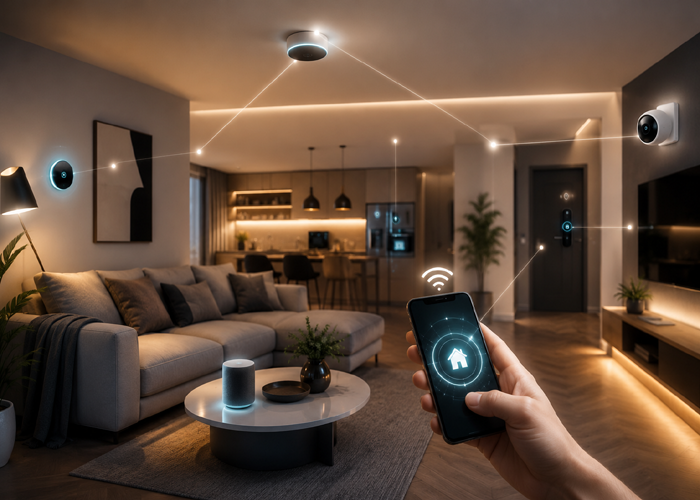
 Smart Home Upgrades For Modern Living
Smart Home Upgrades for Modern Living: Building a Home That Thinks, Learns & Adapts to You
The concept of a smart home has evolved dramatically over the last decade. What began as a collection of remote-controlled gadgets has transformed into an interconnected ecosystem capable of learning routines, optimizing energy usage, enhancing security & improving everyday comfort.
Yet many homeowners still misunderstand what makes a home truly "smart." The goal is not to fill every room with technology. The real objective is to create an environment that reduces friction in daily life. A successful smart home should quietly anticipate needs, automate repetitive tasks & provide valuable insights without demanding constant attention.
Modern living is increasingly defined by efficiency, convenience, sustainability & personalization. Smart home upgrades sit at the intersection of all four. Whether you're renovating an existing property or gradually modernizing your current residence, understanding which upgrades deliver meaningful value can help you invest wisely.
This guide explores the next generation of smart home improvements and explains how they contribute to a more intelligent living experience.
Many homeowners begin their smart home journey by purchasing individual devices such as smart bulbs or video doorbells. While these products offer benefits, they often operate independently.
Modern smart homes function differently.
Instead of isolated gadgets, today's systems create relationships between devices. Lights communicate with sensors. Thermostats interact with weather data. Security systems coordinate with smart locks and cameras. Voice assistants act as central command hubs.
The result is a home that behaves as a unified ecosystem rather than a collection of disconnected technologies.
Imagine arriving home after sunset. Your driveway lights activate automatically. The front door unlocks through secure authentication. Indoor lighting adjusts to your preferred brightness level. The thermostat prepares your ideal temperature. Your favorite music begins playing softly in the background.
This is connected living.
Lighting remains one of the most impactful smart home upgrades because it affects comfort, productivity, mood & energy consumption.
Beyond Basic Automation
Traditional smart lighting focuses on turning lights on and off remotely. Modern systems go much further.
Advanced lighting ecosystems can:
* Adjust brightness throughout the day
* Match natural daylight cycles
* Respond to room occupancy
* Create personalized scenes
* Reduce energy waste
* Support better sleep patterns
For example, bright white light can help improve focus during work hours, while warmer tones in the evening encourage relaxation and prepare the body for sleep.
Human-Centric Lighting
A growing trend is human-centric lighting.
These systems mimic natural sunlight patterns, gradually shifting color temperatures throughout the day. Morning lighting becomes energizing while evening lighting promotes calmness.
The result is a more comfortable indoor environment that aligns with natural biological rhythms.
Heating and cooling account for a significant portion of household energy consumption.
Smart climate systems help reduce unnecessary usage while improving comfort.
Learning Your Habits
Modern thermostats can analyze patterns such as:
* Wake-up times
* Work schedules
* Sleep routines
* Weekend behavior
* Seasonal preferences
Over time, the system learns when heating or cooling is actually needed.
Instead of running continuously, the system operates intelligently.
Room-by-Room Temperature Management
Traditional HVAC systems treat the entire house as a single zone.
Smart zoning technology allows homeowners to:
* Heat occupied rooms
* Reduce conditioning in unused areas
* Improve comfort consistency
* Lower energy bills
This personalized approach represents one of the most practical smart home investments available today.
Security technology has undergone a major transformation.
Older systems primarily recorded events after they occurred. Modern smart security systems focus on prevention.
Intelligent Awareness
Advanced systems can distinguish between:
* Family members
* Visitors
* Delivery personnel
* Pets
* Unknown individuals
Instead of generating constant notifications, they prioritize meaningful alerts.
Proactive Protection
Modern smart security systems can:
* Detect unusual activity
* Lock doors automatically
* Activate outdoor lighting
* Trigger alarm protocols
* Notify homeowners instantly
The emphasis is shifting from surveillance toward active risk reduction.
Keys have remained largely unchanged for centuries.
Smart entry systems are redefining how homeowners manage access.
Digital Access Management
Instead of making duplicate keys, homeowners can provide temporary digital access for:
* Family members
* Housekeepers
* Dog walkers
* Contractors
* Guests
Permissions can be scheduled, modified or revoked instantly.
Enhanced Security Tracking
Smart locks create activity records that show:
* Who entered
* When they entered
* Which access method was used
This provides visibility impossible to achieve with traditional keys.
The kitchen is rapidly becoming one of the smartest spaces in modern homes.
Connected Appliances
Today's smart appliances can:
* Monitor energy consumption
* Track maintenance needs
* Adjust cooking settings automatically
* Send alerts remotely
Future-ready kitchens increasingly prioritize automation and efficiency.
Inventory Awareness
Emerging technologies are enabling kitchens to:
* Track food supplies
* Suggest recipes
* Reduce food waste
* Improve meal planning
This transforms the kitchen into an active participant in household management.
One of the most significant developments in smart homes is the shift toward natural interaction.
Instead of navigating apps, users increasingly communicate through voice commands.
Why Voice Matters
Voice control reduces complexity.
Simple requests such as:
* Turn off all lights
* Lock the front door
* Start movie mode
* Set the temperature to 22 degrees
can be executed instantly.
This accessibility benefits all age groups and simplifies technology adoption.
Modern homeowners are increasingly concerned with sustainability & rising utility costs.
Smart energy systems address both challenges.
Real-Time Energy Monitoring
Most households have limited visibility into their energy usage.
Smart monitoring platforms provide insights such as:
* High-consumption devices
* Peak usage periods
* Monthly trends
* Potential inefficiencies
Awareness often leads directly to reduced consumption.
Automated Optimization
Advanced systems can automatically:
* Shift appliance usage to off-peak hours
* Manage battery storage
* Prioritize renewable energy sources
* Reduce unnecessary power consumption
This creates a more efficient and environmentally responsible home.
Water management is becoming an important area of smart home innovation.
Leak Detection Systems
Water damage remains one of the most expensive home disasters.
Smart sensors can identify:
* Hidden leaks
* Pipe failures
* Appliance malfunctions
* Excess moisture
Early detection can prevent costly repairs.
Smart Irrigation
Outdoor water usage can also be optimized through intelligent irrigation systems that consider:
* Soil conditions
* Weather forecasts
* Seasonal requirements
The result is healthier landscaping with reduced water waste.
Entertainment systems are evolving into immersive experiences.
One-Touch Experiences
Instead of adjusting multiple devices separately, homeowners can create scenes such as:
Movie Night
* Dim lighting
* Lower blinds
* Activate sound system
* Turn on television
Game Mode
* Enhanced lighting
* Performance display settings
* Surround audio activation
Automation simplifies what once required numerous manual adjustments.
One of the most promising developments in home technology involves wellness.
Air Quality Monitoring
Indoor air quality significantly affects health and comfort.
Smart sensors can track:
* Humidity
* Carbon dioxide levels
* Airborne particles
* Temperature fluctuations
These systems help maintain healthier indoor environments.
Sleep Optimization
Integrated smart home systems can improve sleep quality through:
* Automated lighting adjustments
* Temperature control
* Noise management
* Personalized nighttime routines
The future smart home increasingly focuses on supporting well-being rather than simply adding convenience.
Current smart homes respond to commands.
Future smart homes will anticipate needs.
Predictive Intelligence
Using behavioral patterns and environmental data, next-generation systems may:
* Prepare rooms before arrival
* Adjust energy usage automatically
* Anticipate maintenance issues
* Optimize comfort without user input
The home becomes less reactive and more proactive.
Many people assume smart homes require large investments.
In reality, modernization can occur gradually.
A practical upgrade path includes:
Phase 1
* Smart lighting
* Smart plugs
* Voice assistant
Phase 2
* Smart thermostat
* Security cameras
* Smart doorbell
Phase 3
* Smart locks
* Energy monitoring
* Advanced automation
Phase 4
* Whole-home integration
* Predictive automation
* AI-driven management
This staged approach allows homeowners to spread costs while learning which technologies deliver the greatest value.
Smart home upgrades are no longer about novelty. They represent a fundamental shift in how people interact with their living spaces.
The most successful smart homes are not those with the most devices. They are the homes that quietly eliminate daily frustrations, improve efficiency, enhance security, support wellness & adapt to changing lifestyles.
As artificial intelligence, automation & connected technologies continue to advance, homes will become increasingly responsive to the people who live in them. The future of modern living is not defined by technology itself but by how seamlessly that technology integrates into everyday life.
A truly smart home is one that works in the background, allowing homeowners to focus less on managing their environment and more on enjoying it.




💬 Comment Section