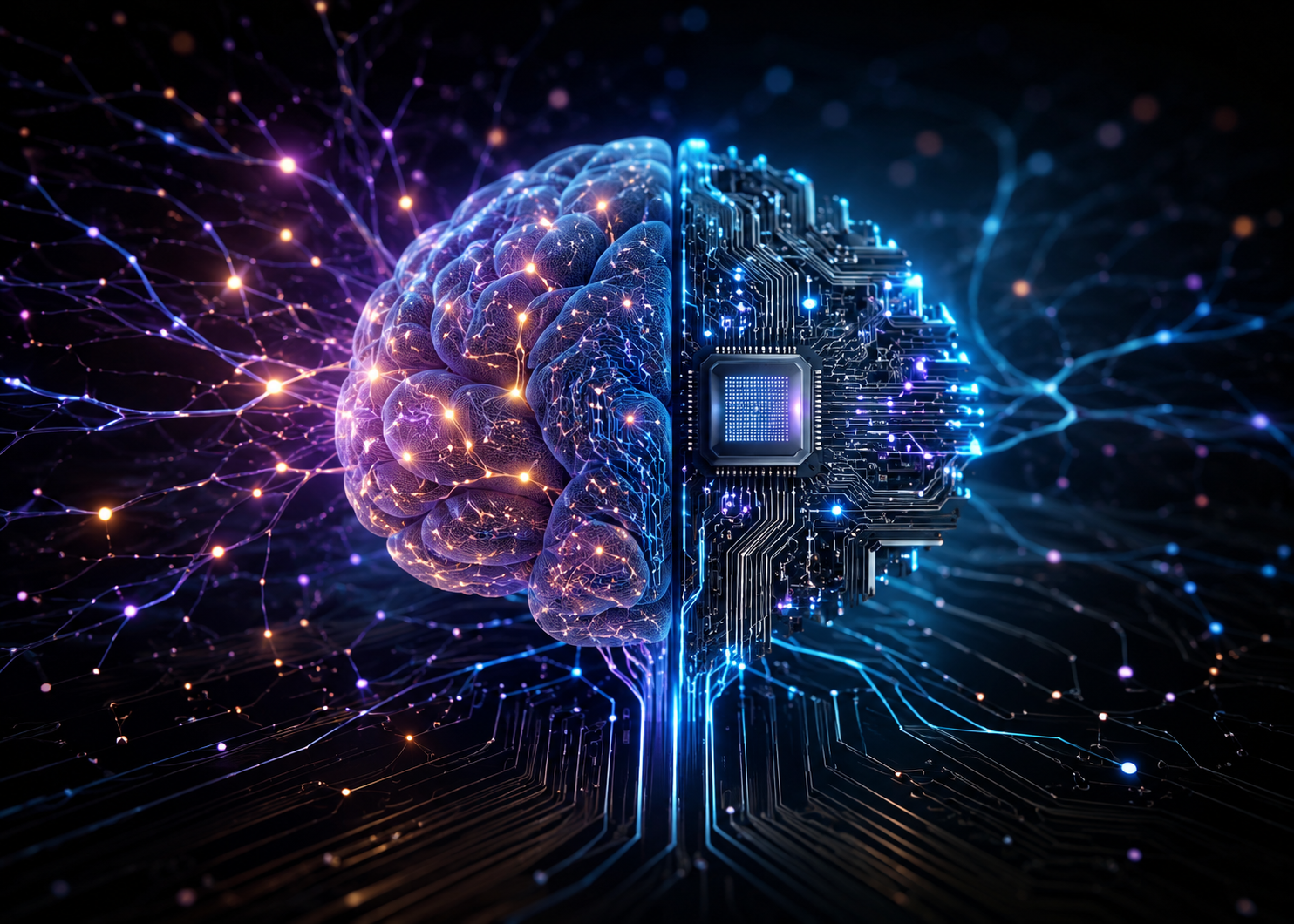
 Neuromorphic Computing The Brain-Inspired Chips Powering Next-Gen AI
The rise of artificial intelligence has transformed industries — from autonomous vehicles and robotics to healthcare diagnostics and natural language processing. Yet, traditional computing architectures are reaching fundamental limits in speed, efficiency & scalability.
Enter neuromorphic computing — a revolutionary approach that draws inspiration from the human brain to build chips capable of mimicking neural processes. Unlike conventional processors, which rely on sequential processing, neuromorphic chips operate with parallel, event-driven architectures designed for real-time, energy-efficient AI computation.
In 2026, these brain-inspired chips are at the forefront of AI evolution, promising to redefine computing, accelerate intelligent systems & enable technologies once considered science fiction.
This blog explores the technology, applications, benefits & future of neuromorphic computing — the next frontier of AI hardware.
Modern AI relies heavily on von Neumann architecture, where memory and processing units are separate. This structure creates a bottleneck, as massive datasets must shuttle back & forth between memory and CPU/GPU cores.
Challenges include:
Energy Inefficiency: AI models require massive power, particularly in deep learning tasks.
Latency: Sequential processing delays real-time AI applications.
Scalability: Large AI models demand growing compute resources and memory bandwidth.
These limitations inspired researchers to look at nature’s most efficient computing system: the human brain.
What is Neuromorphic Computing?
Neuromorphic computing refers to hardware designed to emulate neural structures and processes. The chips mimic the behavior of biological neurons and synapses to perform computations efficiently.
Core Principles
Event-Driven Processing: Computation occurs only when signals (“spikes”) arrive, reducing energy waste.
Parallel Architecture: Thousands or millions of neurons process information simultaneously.
Memory-Compute Integration: Synapse-like structures store weights & perform computation simultaneously, eliminating bottlenecks.
Adaptability and Learning: Neuromorphic chips can adjust synaptic weights, enabling on-chip learning.
Essentially, these chips aim to replicate the efficiency, speed & adaptability of the human brain in silicon.
1. Spiking Neural Networks (SNNs)
Traditional neural networks use continuous signals. SNNs use discrete spikes, similar to neurons firing in the brain, for computation. Advantages include:
Lower energy consumption
Asynchronous, parallel processing
Event-driven learning for real-time adaptation
SNNs form the computational backbone of neuromorphic chips.
2. Memristors
Memristors are resistive memory devices that emulate synaptic behavior by storing weight values in analog form. Benefits:
High-density storage
Energy-efficient computation
On-chip learning capabilities
These devices enable chips to learn and process data simultaneously.
3. Neuromorphic Architectures
Leading neuromorphic chip designs include:
IBM TrueNorth: 1 million neurons, ultra-low power consumption.
Intel Loihi: On-chip learning, scalable SNNs.
BrainChip Akida: Edge AI optimized for IoT & real-time processing.
These architectures demonstrate the potential of brain-inspired computing to handle tasks traditional CPUs and GPUs struggle with.
Advantages of Neuromorphic Computing
Neuromorphic chips offer several key advantages over conventional AI hardware:
Energy Efficiency
Event-driven processing consumes orders of magnitude less power.
Ideal for mobile, IoT & edge AI devices where energy is limited.
Real-Time Processing
Parallel, spike-based computation allows instantaneous responses for robotics, autonomous vehicles & sensor networks.
Scalability
Neuromorphic architectures scale naturally, mimicking the brain’s ability to handle massive parallel processes.
Adaptivity and Learning
Chips can adjust weights dynamically, supporting online learning & autonomous adaptation.
Reduced Latency
Localized memory-compute integration minimizes data transfer delays, crucial for AI at the edge.
Neuromorphic computing is poised to revolutionize industries:
1. Autonomous Vehicles
Real-time sensor fusion
Low-latency decision-making
Energy-efficient AI on self-driving cars
2. Robotics
Adaptive behavior in unstructured environments
Efficient sensory processing and motion planning
On-device learning for dynamic tasks
3. Edge AI and IoT
Smart cameras and surveillance systems with real-time detection
Drones and wearable devices performing AI tasks without cloud dependency
Reduced power requirements for remote devices
4. Healthcare and Neuroscience
Brain-inspired computation models neurological disorders
Real-time EEG or MRI analysis for diagnostics
Personalized treatment recommendations
5. Natural Language Processing (NLP)
Low-latency translation and voice recognition on mobile devices
Efficient on-device processing for AI assistants
6. Cybersecurity
Adaptive anomaly detection
Rapid, energy-efficient threat assessment
Autonomous network defense mechanisms
Neuromorphic computing enables AI in scenarios where power, latency & adaptability are critical, expanding the boundaries of next-gen applications.
| Feature | Traditional GPU/CPU | Neuromorphic Chip |
| Processing | Sequential, clock-driven | Parallel, event-driven |
| Energy Use | High | Ultra-low |
| Memory | Separate from processing | Integrated (synapse-like) |
| Learning | Requires cloud | On-chip, adaptive |
| Ideal Use Cases | Cloud AI | real-time adaptive systems |
Neuromorphic chips don’t replace GPUs but complement them, particularly for edge AI & adaptive applications.
Neuromorphic Computing and AI Efficiency
Energy consumption is a growing concern in AI. Large models like GPT-4 & GPT-5 consume megawatts of power during training and inference. Neuromorphic computing addresses this by:
Event-driven computation: Only firing neurons consume power
Analog memory storage: Reduces energy for data movement
Parallel processing: Increases throughput while minimizing energy per operation
These efficiencies could democratize AI, enabling advanced intelligence in mobile devices, IoT sensors & robotics without reliance on massive data centers.
Neuromorphic computing is critical for next-generation AI, particularly in areas requiring:
Real-time reasoning (autonomous navigation, industrial control)
Adaptive learning (robots learning from environment)
Energy-efficient computation (edge devices, mobile AI)
As AI models grow larger and more complex, brain-inspired chips will handle workloads conventional architectures cannot sustain efficiently.
Global Research and Industry Leaders
1. IBM TrueNorth
Launched in 2014, with ongoing development
1 million neurons, low-power architecture
Focus on pattern recognition and sensory processing
2. Intel Loihi
Scalable neuromorphic architecture
Supports on-chip learning
Applications in robotics, adaptive AI & edge computing
3. BrainChip Akida
Focused on low-power AI for IoT and edge devices
Event-based processing and SNN support
Compatible with vision, audio & multimodal inputs
4. European and Asian Research Initiatives
EU Human Brain Project exploring large-scale neuromorphic systems
Japan’s RIKEN labs advancing AI chips for robotics & healthcare
While promising, neuromorphic computing faces hurdles:
Programming Complexity
Traditional software frameworks are incompatible with spiking neural networks
New programming paradigms & tools are required
Hardware Maturity
Memristor-based designs are still experimental
Fabrication challenges for large-scale deployment
Standardization
Lack of standardized architectures and benchmarks
Integration with existing AI ecosystems requires collaboration
Application-Specific Focus
Neuromorphic chips excel in adaptive, low-latency tasks but may not replace GPUs for large-scale cloud AI
Despite these challenges, investments in software frameworks & hardware innovation are accelerating adoption.
Future Prospects: Toward Brain-Like Intelligence
Neuromorphic computing paves the way for truly intelligent systems:
On-Device AI: Autonomous learning without cloud reliance
Energy-Scaled AI: AI at the edge with minimal energy footprint
Adaptive Systems: Robots, vehicles & devices that learn and respond in real time
Human-Machine Collaboration: Brain-inspired AI working alongside humans in healthcare, manufacturing & education
Some researchers even envision hybrid systems combining GPUs and neuromorphic chips, blending raw AI power with adaptive, energy-efficient computation.
Neuromorphic computing represents a paradigm shift in computing, inspired by the human brain’s efficiency and adaptability. By mimicking neurons and synapses, these chips enable:
Energy-efficient AI computation
Real-time decision-making
Adaptive, intelligent systems at the edge
As we move toward 2026 and beyond, neuromorphic chips will be critical enablers of next-gen AI, empowering robots, autonomous systems, healthcare innovations & IoT devices.
The era of brain-inspired AI is here. Traditional computing will continue, but the future of intelligent, efficient, adaptive systems lies in neuromorphic hardware. For industries, researchers & tech enthusiasts, this represents one of the most exciting frontiers of the 21st century.






💬 Comment Section